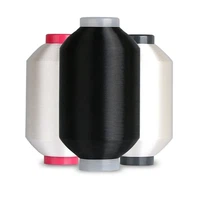
Hot-melt yarn is suitable for a variety of textile processes, including but not limited to the following:

- Melt spinning: The most common application of hot-melt yarn is to make fibers through the melt spinning process. In the melt spinning process, the hot-melt yarn is melted at high temperature and passed through the spinning device to become a fiber. This process is widely used in the preparation of synthetic fibers such as polyester fibers, nylon fibers, etc.
- Melt blowing: Hot-melt yarn can also be used to make non-woven fabrics through the melt-spinning process. In the melt-spinning process, the hot-melt yarn is sprayed at high speed to form a continuous fiber network structure, which is then cooled and solidified to form a nonwoven fabric. This process is often used in the preparation of filter materials, medical supplies, etc.
- Melt coating: Hot-melt yarn can be used in melt coating process to coat hot-melt yarn on the surface of other textiles. After being melted at high temperature, the hot-melt yarn is attached to the surface of the textile through a coating process, providing enhanced bonding performance and functionality.
- Melt bonding: Hot-melt yarn can be used in melt-bonding process to fuse hot-melt yarn with other fiber materials under high temperature and pressure. This process is often used to prepare composite materials, textile coatings, etc.
In addition to the above processes, hot-melt yarn can also be blended and interwoven with other fiber materials to achieve different functional and performance requirements. In conclusion, hot-melt yarns have broad application potential in textile processes and can be used to prepare various textiles and textile materials.