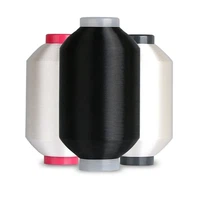
The blending effect of hot melt yarn with other fiber materials depends on the compatibility and interaction between fibers. The following are some common effects of blending heat-melt yarn with other fiber materials:

Enhanced Strength: Blending of hot-melt yarns with higher-strength fibers can improve the overall strength and durability of textiles.
Increased softness and comfort: Blending of heat-melt yarns with soft fibers (such as cotton, lyocell, etc.) can increase the softness and comfort of textiles, providing better touch and wearing experience.
Enhanced heat resistance: Blending of heat-melt yarns with heat-resistant fibers (such as polyimide, aramid, etc.) can improve the high-temperature resistance of textiles, making them suitable for applications in high-temperature environments.
Rich color effects: The blending of hot-melt yarns with fibers of different colors can create a variety of color effects and increase the visual appeal of textiles.
Increased functionality: Blending of heat-melt yarns with fibers with special functions (such as waterproof fibers, antibacterial fibers, etc.) can give textiles additional functional properties.
The combination of blended hot-melt yarn and other fiber materials can achieve a variety of effects and characteristics, providing more choices and application fields. The specific blending effect depends on factors such as the selected fiber material, blending ratio and process parameters.