

Hot melt yarn and hot melt adhesive are related in that they both involve thermoplastic materials that can be melted and applied for bonding purposes. However, they serve different functions and are used in distinct applications. Here's a breakdown of the relationship between hot melt yarn and hot melt adhesive:
 Composition:
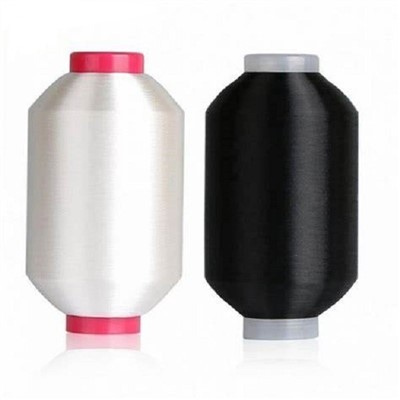
- Hot Melt Yarn: Hot melt yarn is a type of yarn or filament that is made from thermoplastic materials such as polyester or nylon. It is designed to melt and fuse when exposed to heat.
- Hot Melt Adhesive: Hot melt adhesive, on the other hand, is a formulation of thermoplastic polymers, resins, and additives. It is commonly found in the form of solid sticks, pellets, or granules that melt into a liquid state when heated.
Application Method:
- Hot Melt Yarn: Hot melt yarn is typically used in manufacturing processes where it is woven into fabrics or applied to materials as a filament. Activation of the yarn occurs through heat, allowing it to bond with other materials.
- Hot Melt Adhesive: Hot melt adhesives are applied in a molten state using hot glue guns or other dispensing equipment. The adhesive solidifies upon cooling, forming a strong bond between substrates.
Bonding Mechanism:
- Hot Melt Yarn: The bonding mechanism of hot melt yarn involves melting and fusing the thermoplastic fibers to create a cohesive and durable bond with the substrate materials.
- Hot Melt Adhesive: Hot melt adhesives bond substrates by creating a solid bond as they cool and solidify. The adhesive forms a strong, flexible bond upon solidification.

Applications:
- Hot Melt Yarn: Common applications of hot melt yarn include textiles, seam sealing in garments, embroidery, and other applications where a thermoplastic filament is needed for bonding or reinforcement.
- Hot Melt Adhesive: Hot melt adhesives are versatile and are used in a wide range of industries for bonding materials such as paper, cardboard, plastics, wood, and textiles. They find applications in packaging, product assembly, woodworking, and more.
Properties:
- Hot Melt Yarn: The properties of hot melt yarn include strength, durability, and the ability to melt and fuse at specific temperatures. It may also exhibit characteristics such as flexibility or elasticity depending on the type of thermoplastic used.
- Hot Melt Adhesive: Hot melt adhesives offer properties such as fast setting times, excellent adhesion, and a wide range of bond strengths depending on the formulation. They are available in various formulations to suit different applications.
Both hot melt yarn and hot melt adhesive leverage the thermoplastic nature of their materials for bonding applications. While hot melt yarn is typically used as a filament in textiles, hot melt adhesive is a standalone adhesive applied in a molten state for bonding a variety of substrates. Their commonality lies in the use of heat to achieve effective bonding.


