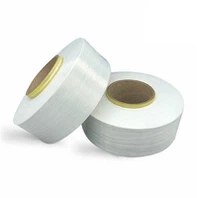
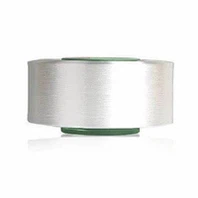
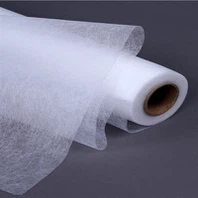
Quick Summary: When evaluating total production cost-including material, labor, energy, quality risk, and lifecycle performance-hot melt yarn generally proves more cost-effective than liquid adhesives for bonding automotive interior textiles and composites. Although liquid adhesives appear cheaper per unit material, they incur higher labor costs, longer cycle times, VOC compliance costs, quality defects, and end-of-life recycling barriers. Hot melt yarns, particularly TPU Hot Melt Monofilament and other engineered heat-activated filaments, reduce processing steps, support automation, lower waste and emissions, and improve long-term durability, resulting in lower total cost of ownership (TCO) over the lifecycle of automotive interior products.
Introduction: Cost Efficiency Is More Than Material Price
In automotive interiors-seat covers, headliners, door panels, carpets, and trim-bonding materials must deliver strength, durability, appearance, and compliance with emissions standards. Traditionally, liquid adhesives (solvent-based or water-based adhesives, two-component epoxies, etc.) have been used due to established processes. However, production realities have changed:
- OEMs demand higher throughput
- Labor costs continue to rise
- Environmental/VOC regulations are becoming stricter
Recycling and end-of-life considerations impact material selection
In this environment, hot melt yarn (a category of heat-activated bonding fiber) is increasingly adopted as an alternative to liquid adhesives.
What Drives Cost in Automotive Interior Bonding
1. Material Cost
Liquid adhesives: Often cheaper per kilogram, but require precise formulation, storage, and shelf-life management.
Hot melt yarn: Higher unit price per kilogram than some adhesives, but the effective bonding quantity is lower with integrated fibers.
2. Labor Cost
Liquid adhesives: Require manual or semi-manual application, wet handling, and curing steps.
Hot melt yarn: Integrates bonding into the textile or lamination process; compatible with automated lines, reducing manual handling.
3. Production Time & Throughput
Liquid adhesives: Curing/setting time adds minutes to cycle times, slowing line speed.
Hot melt yarn: Bonds instantly under heat and pressure, eliminating curing, reducing cycle times and increasing throughput.
4. Energy Consumption
Liquid adhesives: Curing ovens and drying tunnels consume significant energy.
Hot melt yarn: Heat activation localized to thermal presses/calender rolls; typically less energy demand.
5. Quality & Rework
Liquid adhesives: Variability in application thickness, flow, and film uniformity leads to defects, runs, and rework.
Hot melt yarn: Predictable, uniform bonding across textile surfaces, reducing defects and rework costs.
6. VOC & Compliance
Liquid adhesives: Often emit VOCs during application and curing; require capture/abatement systems.
Hot melt yarn: No liquid solvent emissions; easier compliance with VOC regulations (important for automotive plants).
7. End-of-Life Recycling
Liquid adhesives: Introduce dissimilar materials that complicate recycling of seat covers and panels.
Hot melt yarn: When matched with compatible substrate polymers, enables simpler recycling pathways.
Hot Melt Yarn vs Liquid Adhesives: Cost Comparison Table
| Cost Factor | Liquid Adhesives | Hot Melt Yarn |
|---|---|---|
| Unit material cost | Lower | Moderate |
| Labor cost | High | Low |
| Line speed impact | Slower | Faster |
| Energy consumption | Higher | Lower |
| VOC compliance cost | High | None |
| Quality rework risk | Moderate–High | Low |
| End-of-life recycling | Challenging | Easier |
| Total lifecycle cost | Higher | Lower |
📩 Request a product sample now
How Hot Melt Yarn Reduces Total Cost in Automotive Interiors
Faster Production Cycles
Heat-activated yarns bond instantly in a continuous lamination or thermal press process, eliminating the drying/curing stages required for liquid adhesives and enabling higher output per shift.
Automation Compatibility
Hot melt yarns are directly integrated into the textile feed (weaving/knitting/embroidering/layup), reducing handling and enabling seamless automation.
Consistent Quality
By embedding bonding functionality at the filament level-especially with TPU Hot Melt Monofilament-bonding variability is minimized, reducing defects and scrap.
Lower Environmental Compliance Burden
Because hot melt yarns do not involve solvents or VOC emission during activation, manufacturers avoid costly abatement systems and ongoing compliance overhead.

When Liquid Adhesives Still Make Sense
Liquid adhesives may still be the logical choice when:
- Bonding rigid, non-textile substrates (metal/plastic panels where yarn-based solutions are impractical).
- Application involves large flat laminates where film adhesives are already well integrated.
- Existing lines are fully configured for adhesive application and retrofit cost is prohibitive.
However, for textile to textile, textile to foam, and layered composite fabrics-common in automotive interiors-hot melt yarn excels.
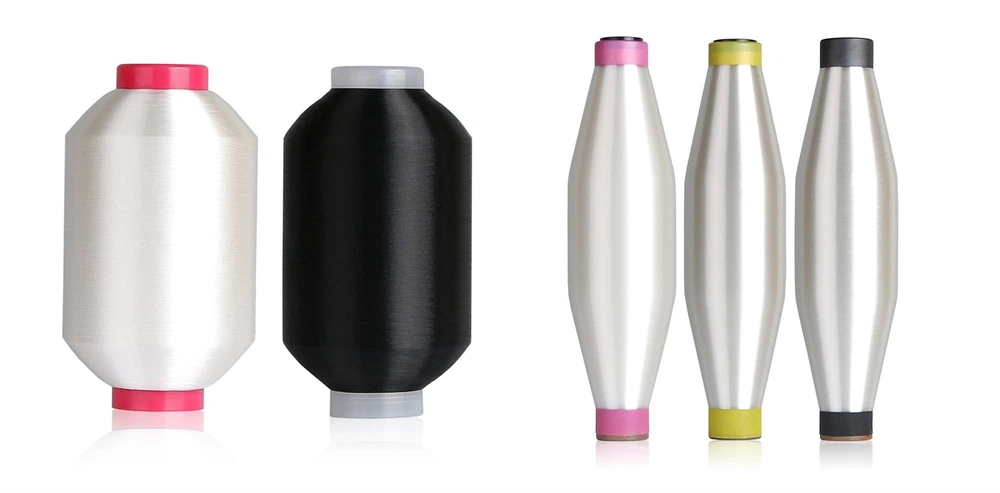
TPU Hot Melt Monofilament: A High-Performance Hot Melt Yarn Variant
TPU Hot Melt Monofilament offers:
- Uniform diameter → predictable heat activation
- Elastic recovery → maintains bond integrity under stress
- Compatibility with stretch and structured textiles
- Excellent fatigue resistance (important for seats and upholstery)
These attributes further reduce lifecycle maintenance cost and improve customer satisfaction over the product life.
Real-World Impact: A Typical Automotive Interior Line
A comparative analysis may show that:
- Removing curing ovens saves energy costs and floor space.
- Replacing manual adhesive stations with integrated yarn bonding reduces skilled labor dependency.
- Scrap rates drop due to consistent bonding quality.
- VOC abatement systems can be downsized or repurposed.
All these improvements contribute to a lower effective cost per finished unit.
Future Outlook
As automotive OEMs emphasize lightweighting, recyclability, and digital manufacturing, materials like hot melt yarn and TPU Hot Melt Monofilament will continue to gain share. The shift from liquid adhesives to heat-activated yarns represents not just a materials change, but a manufacturing paradigm shift toward cleaner, faster, and more cost-effective processes.
References
- Journal of Automotive Textiles - Heat-Activated Bonding Materials in Automotive Interiors
- Textile World - Hot Melt Yarn vs Adhesive Bonding Performance
- Industry Technical Datasheets - Automotive Interior Bonding Criteria