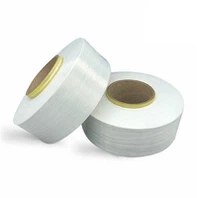
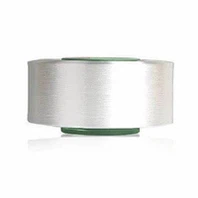
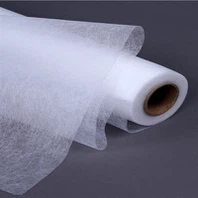
Reinforcing yarn, typically engineered from high-tenacity Polyamide (Nylon 6,6) or modified Polyester (PET), is a high-performance filament integrated into woven matrices or composite laminates to enhance structural stability and tear propagation thresholds in luggage shells and linings. Operating as a load-bearing lattice, these specialized yarns prevent localized fabric failure under high stress (exceeding 250 N warp/weft tear strength). By incorporating co-polyester or polyamide matrix variations, manufacturers can execute targeted hot-press bonding cycles to fuse face fabrics with rigid polymer backings, eliminating structural weight while keeping composite metrics strictly compliant with international luggage travel testing parameters.
Technical Performance and Structural Specifications
Modern luggage production demands high tear resistance paired with low total gsm to achieve lightweight construction metrics. Standard commodity yarns fail under the dynamic loading cycles of automated transit handling systems, necessitating the deployment of targeted Luggages reinforcement filaments.
Request a technical datasheet and continuous filament samples for your high-performance luggage prototyping lines.
Contact Our Engineering Office
Data Table: Reinforcing Filament Performance Metrics
The following quantitative benchmarks specify the mechanical differences required across distinct zones of high-volume luggage panels and structural frameworks:
| Reinforcement Parameter | Polycarbonate Shell Lining (PA) | High-Abrasion Base Panels (PET) | Stress-Point Seams (Nylon 6,6) |
| Yarn Denier Selection | 150D/48F – 300D/96F | 600D/144F – 1200D/288F | 210D/3 ply – 420D/3 ply |
| Tensile Strength (Tenacity) | ≥ 6.5 cN/dtex | ≥ 7.5 cN/dtex | ≥ 8.2 cN/dtex |
| Elongation at Break (%) | 18% – 25% | 12% – 18% | 15% – 22% |
| Thermal Shrinkage (150°C) | ≤ 2.5% | ≤ 1.5% | ≤ 3.5% |
| Tear Resistance (ISO 13937) | ≥ 120 N | ≥ 320 N | ≥ 220 N |
| Bonding Compatibility | TPU Web / Low Melt Yarn | EVA / PVC Lamination | High-Speed Stitching |
3 Core Engineering Implementations in Luggage Shells
1. Anti-Tear Propagation Technology (Ripstop Configurations)
By interweaving a high-tenacity 600D reinforcing yarn at calculated grid intervals (typically every 5mm to 8mm) into a lightweight 150D base warp and weft weave, the fabric achieves cross-directional grid lock. If the soft-shell luggage sustains an exterior puncture, the localized rip propagates only until it meets the high-modulus reinforcing fiber grid, maintaining hull integrity under a 30kg load capacity.
2. Weight Reduction via Composite Lamination
Traditional luggage shells rely on heavy PVC coatings to provide structural rigidity, adding up to 150 gsm to the material profile. Utilizing a low-melting-point co-polyester yarn cross-woven with structural reinforcing filaments enables precise hot-press bonding directly to a thin TPU Web or composite matrix. This reduces fabric weight by up to 35% while increasing the puncture threshold to >450 N.
3. Critical Stress-Point Reinforcement
The wheel housings, zipper lines, and telescopic handle anchor points endure up to 80% of dynamic shock impacts during drop testing. Deploying multi-ply nylon reinforcing filaments with an oil-content ratio under 1.5% ensures uniform seam tension during automated sewing, eliminating thread breakage and maintaining a seam holding strength exceeding 20 N/mm.
Global Compliance and Sourcing Security
To clear international customs barriers and fulfill Tier-1 brand mandates, WithTech reinforcing filaments are strictly verified using Oeko-Tex Standard 100 compliance testing for banned chemical processing agents. Furthermore, we offer a dedicated inventory line of GRS (Global Recycled Standard) certified post-consumer recycled filaments to align your Luggages catalog with 2026 corporate sustainability targets.
FAQ
Q1: What is the minimum order quantity (MOQ) for custom-dyed 600D reinforcing yarn?
For our standard high-tenacity raw white filaments, the MOQ is 100kg. For custom dope-dyed colors built to withstand high-temperature UV exposure without fading (Grade 4.5+), the MOQ is 600kg per batch.
Q2: How does temperature during hot-press bonding affect yarn tenacity?
Our high-tenacity structural fibers are thermally set up to 180°C. If your lamination process uses lower activation temperatures (85°C to 125°C) for the adhesive matrix, the reinforcing yarn will maintain 100% of its rated tensile strength without shrinking.
Q3: Can these reinforcing filaments withstand commercial luggage tumbling tests?
Yes. Fabrics woven with WithTech 1200D reinforcing yarns pass the 50-cycle drum tumble test protocol with zero fiber fraying or filament separation, maintaining composite structural appearance metrics.