

Identifying polyester and nylon fabrics can be done through a few simple tests and observations. Both are synthetic fibers, but they have distinct characteristics that can help differentiate them:
1. Visual and Tactile Inspection
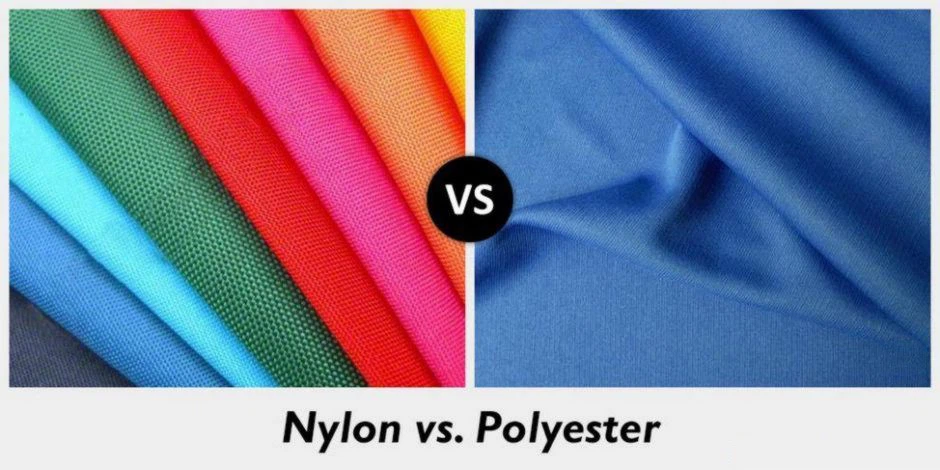
Polyester: Polyester fabric often has a slightly shiny appearance and a smooth, almost slippery feel. It tends to be less stretchy than nylon and has a more rigid structure. Polyester is generally more prone to static electricity, which can be felt when handling the fabric.
Nylon: Nylon fabric usually has a softer and silkier texture compared to polyester. It tends to be more lustrous and stretchy, providing a more flexible feel. Nylon can also be slightly warmer to the touch, especially when compared to polyester.
2. Water Absorption Test
Polyester: When placed in water, polyester fabric repels water and dries quickly. It is hydrophobic, meaning it does not absorb moisture easily.
Nylon: Nylon, on the other hand, is slightly hydrophilic, meaning it can absorb a small amount of water. When wet, nylon fabric tends to retain moisture longer than polyester and dries at a slower rate.
3. Burn Test
Polyester: When burned, polyester melts and produces a sweet, chemical smell. The edges will harden and form beads that can be crushed into a fine powder. Polyester burns slowly and may self-extinguish when the flame is removed.
Nylon: Nylon burns and melts faster than polyester, producing a light, waxy, or celery-like smell. It also forms hard beads when melted, which are more difficult to crush compared to those from polyester. The flame can be more intense with nylon, and it may drip as it burns.
4. Stretch Test
Polyester: Polyester fabric is less stretchy and retains its shape well, making it less elastic under tension. It tends to bounce back to its original shape quickly after being stretched.
Nylon: Nylon fabric is more elastic and can stretch significantly. It provides greater flexibility and can feel more forgiving when pulled or tugged.
5. Static Electricity Test
Polyester: Polyester is more prone to static build-up due to its nature as a synthetic fiber. Rubbing polyester against itself or another material can create noticeable static cling or crackling sounds.
Nylon: Nylon can also produce static electricity, but it is generally less noticeable compared to polyester.
Summary
By using a combination of these tests, you can more accurately identify whether a fabric is polyester or nylon. The most telling differences are in their feel, reaction to water, and behavior when exposed to flame. For the most definitive results, performing a burn test in a controlled environment can offer clear evidence based on smell and melting behavior.


