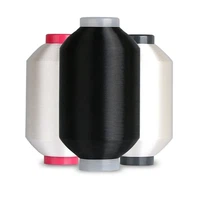
Selecting the appropriate hot melt yarn for a specific application requires consideration of several factors. Here are some important ones:
Melting Point
The melting point of the hot melt yarn is critical to its performance in different applications. A higher melting point may be needed for applications that require higher temperatures or exposure to heat, while a lower melting point may be suitable for applications that require flexibility and softness.
Strength
The strength of the hot melt yarn is another important factor. High-strength hot melt yarns are ideal for applications that require durability and load-bearing capacity, while lower-strength yarns may be more suitable for applications where flexibility and softness are more important.
Elasticity
Elasticity is an important consideration for applications where the hot melt yarn will be subject to stretching or tension. Hot melt yarns with high elasticity can stretch and recover without breaking, making them suitable for use in applications such as textile manufacturing.
Adhesion
Some hot melt yarns are designed to have good adhesion properties and are ideal for use in applications where bonding to other materials is important, such as in the manufacture of laminates.
Chemical Resistance
For some applications, such as in the manufacture of industrial filters or protective clothing, the hot melt yarns must be resistant to certain chemicals, acids or bases.
Color
In some applications, the color of the hot melt yarn may be important for aesthetic reasons, especially in the textile industry.
By taking these factors into account, you can select the hot melt yarn that is best suited for your specific application. It is important to work closely with suppliers and manufacturers to ensure that you are using the right hot melt yarn for your application.