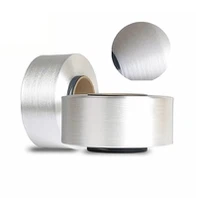
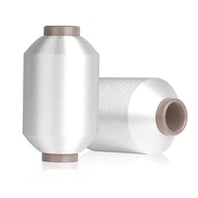
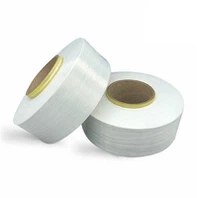
1. The main variety of nylon is aliphatic polyamide fiber, which can be synthesized with a monomer, such as lactam or amino acid. At this time, the Arabic numerals after the nylon name indicate the number of carbon atoms of the lactam or amino acid used, such as nylon 6, nylon 11, etc. It can also be synthesized with two monomers, that is, a diamine and a diacid. At this time, in the two groups of Arabic numerals after the nylon name, the first group represents the number of carbon atoms of diamine, and the second group represents the number of carbon atoms of dibasic acid, such as nylon 66, nylon 610, nylon 1010, etc.
Generally speaking, nylon 66 feels better than nylon 6, and nylon 66 is more comfortable than nylon 6, but it is difficult to distinguish between nylon 6 and nylon 66 on the surface.
Nylon 6 products have the characteristics of high strength, wear resistance, softness and mild skin touch, and have a wide range of applications in the fields of clothing, silk, umbrellas, fishnets, cords, BCF carpet yarns and engineering plastics
2. The degree of polymerization of nylon 6 is 140-200, and the degree of polymerization of nylon 66 is 55-77.
The molecular chain of nylon contains a large number of amide groups, which can form strongly attractive hydrogen bonds with the amide groups of adjacent molecular chains. The huge side group is easy to form crystals when the molecular chain is stretched, and its crystallinity is 50% to 60%. Nylon is made by the melt spinning method, and the morphology under the microscope is similar to that of polyester, the cross section is round, and the longitudinal direction is smooth and straight. The density is small, about 1.14g/cm3.
(1) The main properties of nylon
1. Hygroscopicity and dyeability Nylon has good hygroscopicity, and the moisture regain under standard atmospheric conditions is about 4.5%. Good dyeing performance, can be dyed with disperse dyes, acid dyes and other dyes.
2. Mechanical properties The strength of nylon is the highest among synthetic fibers, and the resilience is good. The elastic recovery rate is over 90% when the elongation is 10%. Low initial modulus, easy to deform under small load. The embarrassment resistance is the best, about 10 times that of cotton, 20 times that of wool, and 140 times that of viscose when wet.
3. Thermal properties The glass transition temperature of nylon is relatively low, at 45 to 60 °C, the melting point of nylon 6 is 210 to 215 °C, the decomposition point is 300 °C, and the melting point of nylon 66 is 255 °C. Nylon has poor heat resistance and will shrink when exposed to heat. Its boiling water shrinkage rate is as high as 11.5%. If it is kept at a high temperature of 150 ° C for 50 hours, the fiber will turn yellow and lose its use value.
4. Chemical properties: Nylon is resistant to alkalis and acids, and is treated with 10% caustic soda solution for 16h at 95℃, and the strength is basically not lost. It will dissolve in various concentrated acids. 59% sulfuric acid and hot formic acid and acetic acid can dissolve nylon, and 15% and 20% hydrochloric acid can dissolve nylon 6 and nylon 66 respectively.
5. Optical properties Nylon has poor light resistance, and will turn yellow and brittle if exposed to sunlight for a long time.
(2) The use of nylon
Nylon is mainly filament, and a small amount of short fiber is mainly used for blending with wool, cotton or other chemical fibers, in order to improve the strength and wear resistance of the fabric. A part of nylon filament is used for silk, gauze, lace, etc., and most of it is processed into elastic yarn, which is used to make socks, nylon shirts, gloves, etc. that are durable. Industrial nylon accounts for more than 40%. Due to its high strength, fatigue resistance, strong impact resistance and good affinity with rubber, nylon is suitable for making tire cords such as trucks and airplanes. It is used as a fishing net and its life span is longer than that of cotton fishing nets. 4 to 5 times longer. In addition, it is also used for cables, parachutes, soft ladders, conveyor belts and nylon ropes.