

The post - treatment process of hot melt yarn is a crucial step that can significantly enhance its performance and quality. Here is a detailed look at the various aspects of this process:
1. Heat - Setting
Purpose: Heat - setting is mainly carried out to relieve the internal stresses that occur during the spinning and drawing processes of the hot melt yarn. By doing so, it stabilizes the fiber structure and improves its dimensional stability. This is essential as it helps the yarn maintain its shape and properties during subsequent processing and end - use.
Temperature and Time: The heat - setting temperature is usually slightly lower than the melting point of the hot melt yarn. For example, if the melting point of a particular polyester hot melt yarn is around 250 - 260°C, the heat - setting temperature might be set at 220 - 230°C. The duration of heat - setting typically ranges from 10 - 30 seconds, depending on the thickness and type of the yarn. Thicker yarns may require a longer heat - setting time to ensure that the internal stresses are adequately relieved throughout the fiber cross - section.
Effect on Crystallinity: Heat - setting can also have an impact on the crystallinity of the hot melt yarn. It can lead to an increase in crystallinity as the molecular chains are given the opportunity to rearrange and form more ordered crystalline regions. A higher crystallinity means better heat resistance and mechanical properties. The crystalline regions have a more compact molecular structure, which can withstand higher temperatures and external forces.
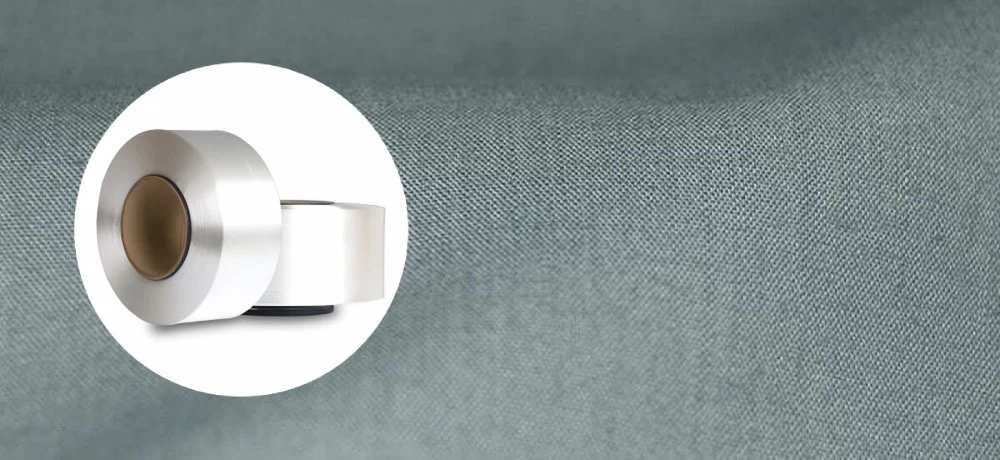
2. Relaxation Treatment
Purpose: Relaxation treatment is aimed at reducing the residual shrinkage of the hot melt yarn. During the spinning and other previous processes, the yarn may have a tendency to shrink due to the orientation of the molecular chains. This shrinkage can cause problems during the application of the yarn, such as dimensional inaccuracies in the final product.
Methods: One common method of relaxation treatment is to expose the yarn to a controlled humid environment or use steam treatment. The moisture or steam can penetrate the fiber and help the molecular chains relax. Another approach is to apply a low - level mechanical tension in a heated environment, followed by a slow release of the tension. This allows the yarn to adjust its structure and reduce the potential for shrinkage.
3. Surface Treatment
Purpose: Surface treatment of hot melt yarn can improve its adhesion and compatibility with other materials. For example, in applications where the hot melt yarn is used to bond different fabrics or substrates, a well - treated surface can enhance the bonding strength.
Coating: One option is to apply a thin coating of a compatible material on the surface of the yarn. This coating can be a polymer with better adhesion properties or a surfactant - like substance that can improve the wetting and spreading of the hot melt yarn on the target material. For instance, a polyurethane - based coating can be used to improve the adhesion of the hot melt yarn to leather or synthetic materials in the footwear or upholstery industries.
Plasma Treatment: Plasma treatment is another advanced surface treatment method. It involves exposing the yarn to a plasma environment, which can modify the surface chemistry of the fiber. Plasma treatment can introduce functional groups on the surface of the yarn, such as hydroxyl or carboxyl groups, which can enhance the reactivity and adhesion of the yarn to other materials.
4. Quality Inspection and Sorting
Inspection: After the post - treatment processes, the hot melt yarn needs to undergo a thorough quality inspection. This includes checking for physical properties such as diameter uniformity, strength, and elongation. Visual inspection for any surface defects, such as uneven coating or damage caused during the post - treatment, is also essential.
Sorting: Based on the inspection results, the yarn is sorted into different grades. High - quality yarns that meet all the required specifications are separated from those with minor or major defects. This sorting process ensures that only yarns of the desired quality are used in further manufacturing processes, thereby maintaining the consistency and reliability of the final products.


