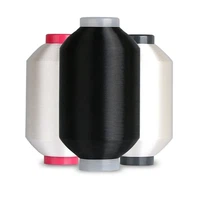
Polyester fiber has many advantages over natural fibers. First, the strength, high modulus, elasticity and durability of polyester fiber are the basis for its success. These unique physical properties make polyester fibers excellent in many applications, especially where high strength and durability are required. Second, the customizability of polyester fibers allows for the production of performance variants suitable for a variety of end uses. This flexibility is critical to meet the needs of specific applications.
 In addition, the cost-effectiveness of polyester is an important advantage. Although natural fibers have good specific stiffness and strength, low density, low energy consumption and good biodegradability, they have poor compatibility with the matrix, mainly because of their hydrophilicity. This can lead to problems during the manufacturing process, such as poor bonding or excessive moisture absorption, which can affect the performance of the final product. In contrast, polyester fibers can be chemically treated to improve interfacial adhesion and wettability with the matrix, thereby improving the overall performance of the composite.
Polyester fibers also have excellent thermal stability and electrical insulation, which makes them useful in applications in high-temperature environments (such as tire cord) and in applications where good electrical insulation is required (such as wires and cables). In addition, polyester fiber also has good processing properties and can be easily processed into products of various shapes and sizes through methods such as melt spinning.
In terms of environmental protection, while natural fibers are considered more environmentally friendly, polyester fibers can also improve their biodegradability by adding specific modifiers. For example, adding linseed oil or pine oil to natural fiber-reinforced polyester composites can significantly improve the biodegradability of the material. This shows that polyester fibers can also reduce their impact on the environment through appropriate modifications.
Polyester fibers offer several advantages over natural fibers, including higher mechanical properties, better cost-effectiveness, excellent thermal stability and electrical insulation, as well as good processability and customizability. These properties make polyester the material of choice for many industrial applications.